Territory
The ground between the worlds
A system is mostly nothing, and the nothing is the point: it is what makes a basin of ore, a wreck nobody cleared or a well of gravity worth arguing over. Your borders are not drawn on a map somewhere — they are the sum of what you hold, and they move one cell at a time.
Five kinds of ground. Five things worth raising on it.
What the ground can be
-
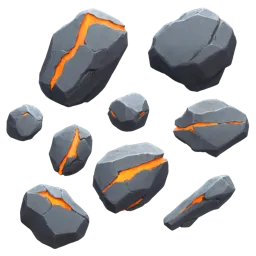
The only ore there is
Mineral belt
Ore does not lie in one place, it lies in basins — and a mining station may only ever stand on one. Not "pays better here": there is nowhere else to put it. Which is why a particular cell can be worth more than a nearer one, and worth taking off somebody.
-
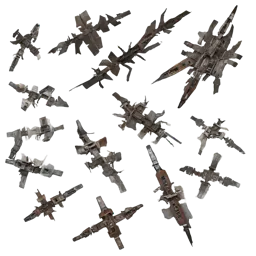
Wall you can clear
Debris field
Something was broken up here and never collected. Nothing stands on it until the wreck is hauled out, and hauling it out costs. A wall you may pay your way through is a different decision from a wall you cannot.
-

Permanent wall
Gravity well
Nothing is ever built here, by anyone, ever. It is the plainest entry on the map and the most valuable: a wall nobody can remove is what turns open space into a corridor, and a corridor is what makes a front worth holding.
-

Cover
Nebula
It blocks nothing and yields nothing. What it does is hide: a world sitting inside one is harder to read from outside, and the probes sent to look at it come home with less than their owner hoped.
-

One to a system, at most
Science anomaly
Whatever it is, it should not be there. It is the only ground a research station can stand on, and what that station does is speed the work on the worlds you already own in that system — in that system, and nowhere else in your empire.
What you can raise on it
Only ever on a cell you already control — building is not how you take ground. A cell carries three of them at most and never two of the same kind, and the three that pay a percentage can be levelled up. Every one of them works for whoever CONTROLS the cell, not for whoever paid: taking somebody's gate is the same thing as owning one.
-
Outpost
A fleet takes a cell; an outpost is what turns it into a frontier. Planted on ground you control, it projects a ring of its own — so an empire grows by taking one cell and then reaching from it, rather than by conquering every hexagon it wants to own. There is a limit to how many you may hold in one system.
-
Mining station
Only ever built on ore, and what it pays goes into the worlds you already own in that system — not into the cell it stands on. Nothing out here produces in the void: a station is a bonus on your planets or it is nothing.
-
Jump gate
One to a system, and it puts your colours on the galactic chart rather than the local one. It works for whoever holds its cell, not for whoever paid to build it — which makes taking somebody's gate a better idea than raising your own.
-
Research station
It cannot stand anywhere but on an anomaly, and there is at most one of those in a system. It speeds the research being done on your worlds there and does nothing for the rest of your empire — a reason to fight over one particular cell instead of counting cells.
-
Defense array
A wall you pay for once and that then holds by itself. Fleets that come for the cell go through its guns first, and the fight leaves a report like any other. It also stiffens the defences of your worlds in that system. Losing it destroys it — an array that survived every failed assault would make one cell unconquerable forever.
How a cell changes hands
And the other half of it is holding one. There are two ways, and they are not the same tool: a defence array is a wall you pay for once and that then stands by itself, while a fleet parked on your own cell is the only defence in the game that can move — it fights with whatever hulls you gave it, and you can always call it home.
- 01
Fly
Ground is taken by a fleet, always — empty ground included. It is the same order either way, and it only reads differently: you claim open space, you conquer somebody's. What it cannot do is skip: the cell has to touch territory you already hold.
- 02
Fight
If the cell is defended, the array and every fleet parked on it meet you as one force, and one commander leads each side. Lose and nothing moves — the wall holds and your fleet limps home. Win and the array is destroyed, the garrisons scatter, and a draw counts as repelled.
- 03
Wait
Winning does not hand it over. A clock starts, and only the player you took it from can stop it by coming back — a third party who wants the cell has to take it themselves and start their own. Ground that belonged to nobody has nobody to cancel it.
What territory will never do
A system like this is defined by its refusals. These four were argued over, and they are the reason the map plays the way it does.
-
It never blocks a fleet
You cannot wall someone in. A trip is a departure and an arrival with a crossing in between — it passes through nothing, so no border can stop it. Being surrounded is a bad position, not a prison.
-
Nothing out here produces in the void
Ground never pays by itself. Every structure is a bonus on the worlds you already own in that system — so territory is worth exactly as much as what you have there to improve, and never a total counted across an empire. If holding ground paid globally, war would become a race for the largest number of hexagons and the shape of a territory would stop mattering.
-
A world is never captured
Neither is the ground it stands on. You can take every cell around someone's colony and still not own the colony. What territory decides is what a system is worth, not who lives in it.
-
Attacking is the declaration
There is no warning step and no paperwork. The first thing a war does is arrive. Two grounds are off limits all the same: an ally's, which the game refuses exactly as it refuses attacking an ally's planet, and anyone still inside their first days in a galaxy.