Metal Mine
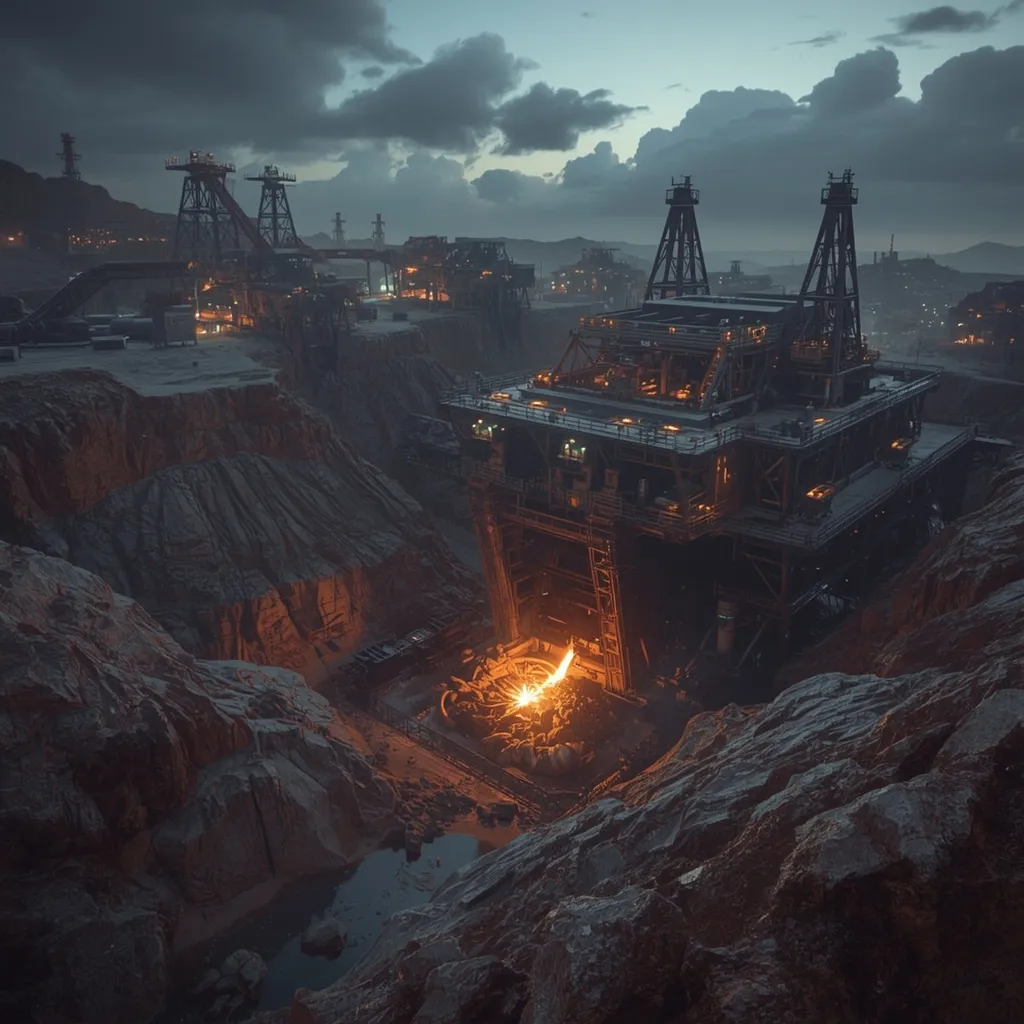
Where every empire starts. Nothing further down this list is affordable without it.
Real-time strategy · Free to play · Closed beta
The worlds agreed to speak to each other again, and for a while it held. Now the fleets are waking up and every system is choosing a side. Claim a homeworld, put a fleet in the sky, and send it out — the crossing does not stop when you close the tab.
The beta is invite-only for now — you will be asked for a password.
A sample readout. Somewhere a fleet is always in the air, and it arrives whether anyone is watching or not.
| Mission | Route | Progress | Arrives in |
|---|---|---|---|
| Attack | 2:114:82:117:3 | 04:12:38 | |
| Transport | 2:114:82:114:11 | 00:41:07 | |
| Espionage | 5:007:25:009:6 | 00:03:52 |
In game
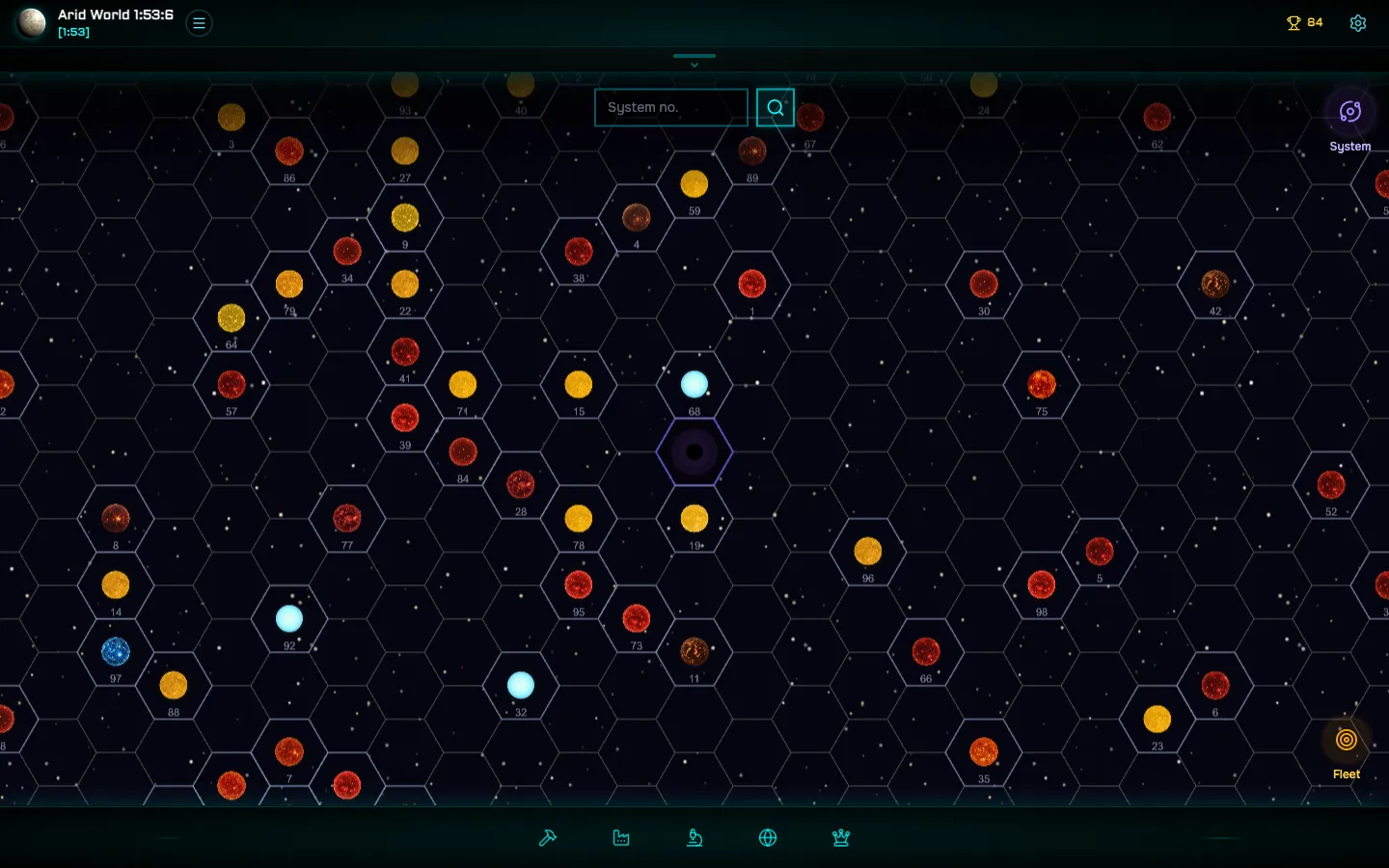
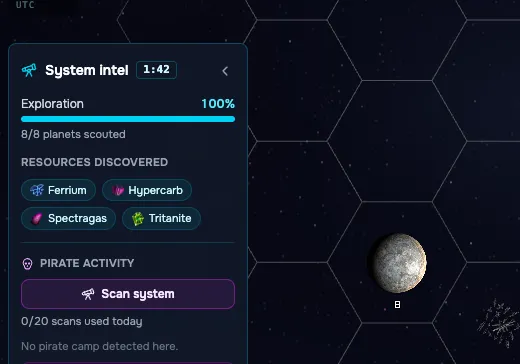
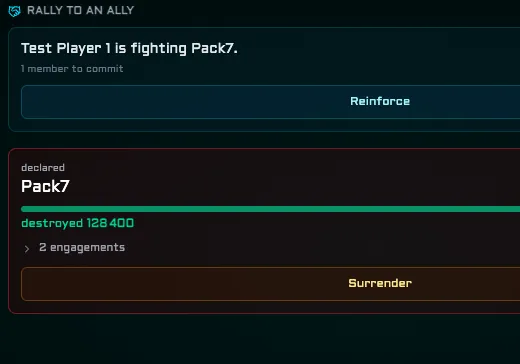
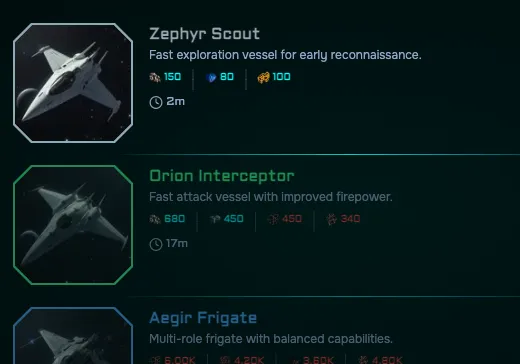
No cinematics. The galaxy you command is the galaxy you look at: a hex chart of contested systems, a homeworld you raise by hand, and a research hall that decides what you are allowed to fly.
Galaxy map
System view
 System view
 War
 War
War Ship research
 Ship research
 Economy
The ground gives up metal, water and stranger things, and it gives them up slowly. Everything you own is a level you paid for and a wait you sat through — and the queue keeps working long after you have gone to bed.
A homeworld, in order
Where every empire starts. Nothing further down this list is affordable without it.
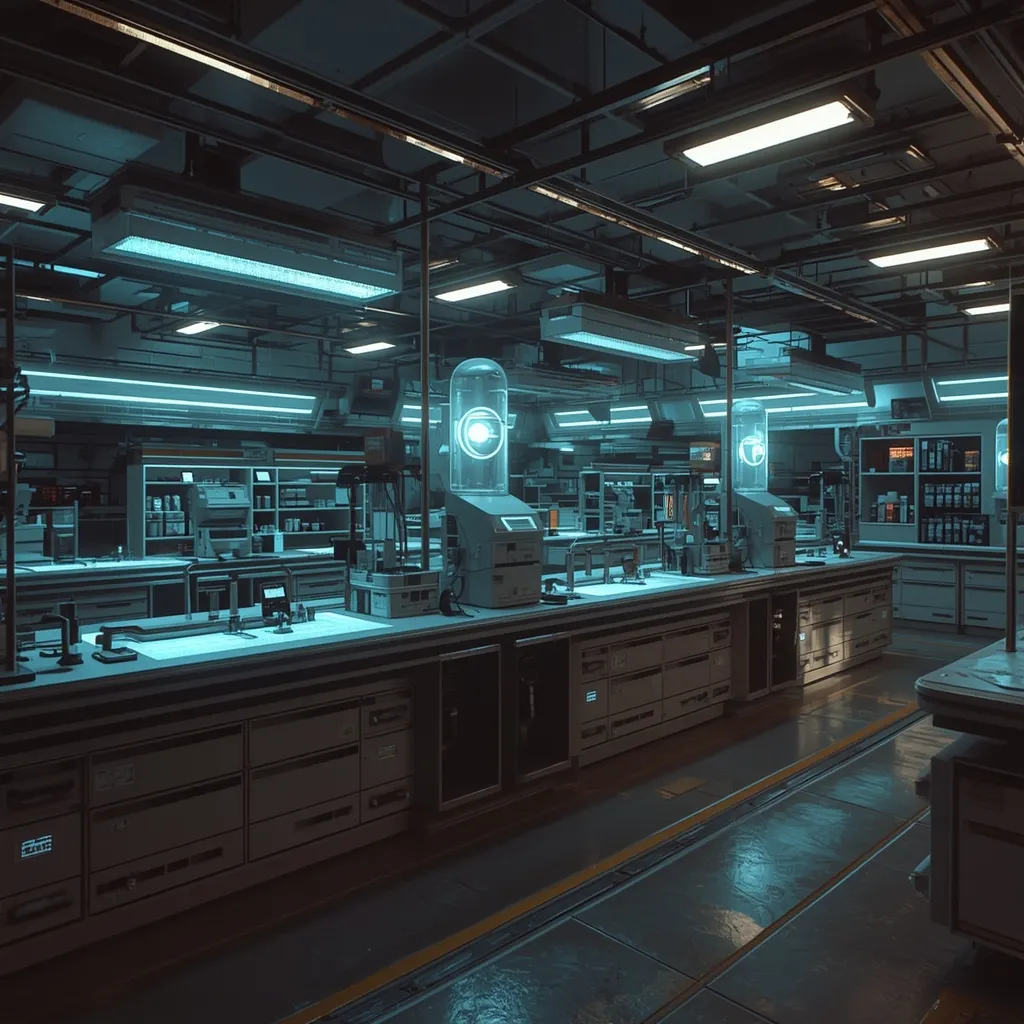
The hall that decides what your engineers are allowed to imagine.
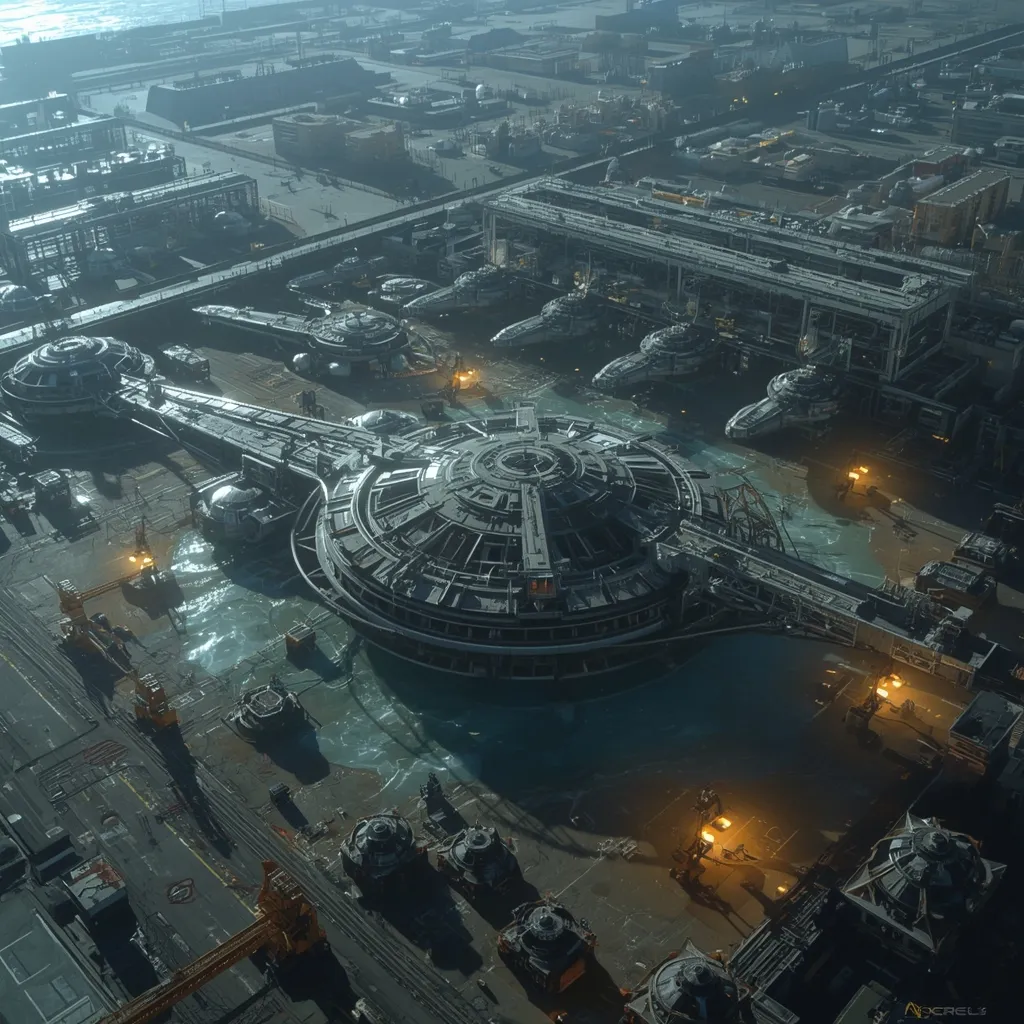
Where a doctrine stops being a diagram and becomes a hull with a crew in it.
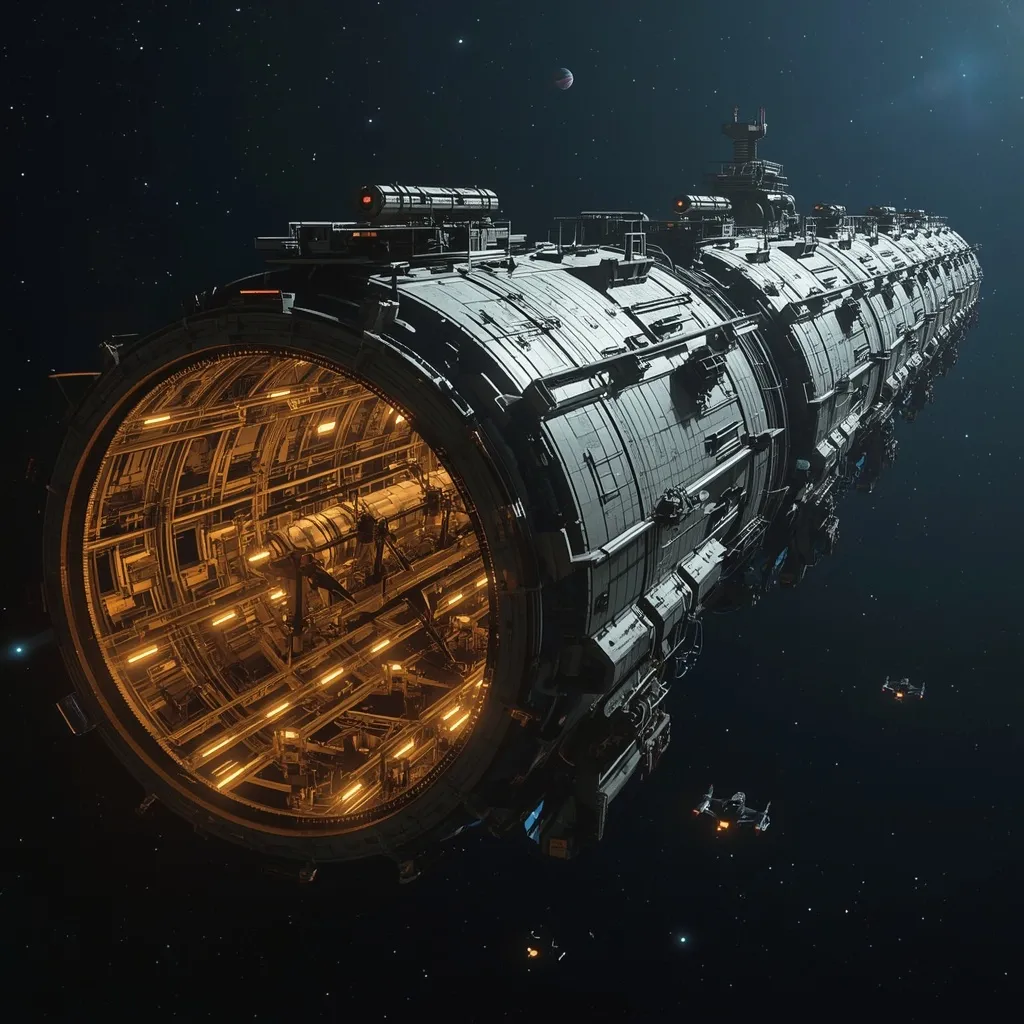
The heavy slips. The largest hulls in the galaxy cannot be laid down anywhere else.
What comes out of the ground
No two worlds hold the same things, and you only find out by looking.
 Metal
Metal  Ferrium
  Silicon
  Energy
  Nutrients
  Plasma
  Neotitanium
  Orichalcum
 Fleet
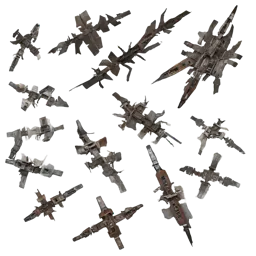
A ship is a frame with modules bolted onto it, and that pairing is a doctrine you research before you can build it. The catalogue holds thirty-two of them across five tiers — and the tiers are five ages of the galaxy, from the first hulls that crossed between planets to the Titans that outgrew the people who drew them.
Select a doctrine
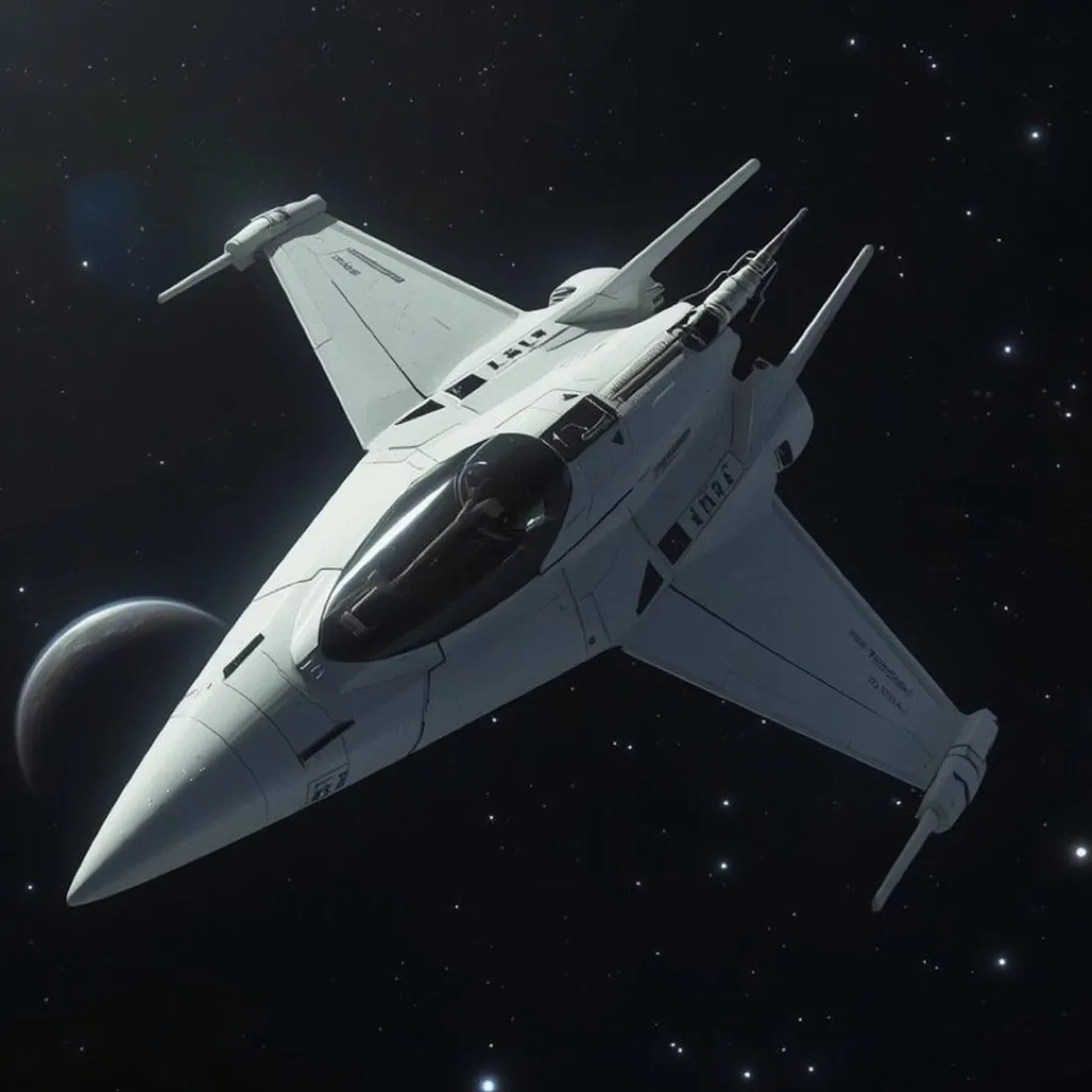 T1
T1Thin hull, good eyes. It goes first so the rest of the fleet does not have to.
Profile
Era
The Great Reunification
The first ships to cross between planets, built in the quiet years after the worlds agreed to speak again.
Six of the thirty-two — every age represented, and the last one twice.
Territory
Most of a system is nothing at all, and that is what makes the rest matter: a basin of ore, a wreck nobody ever cleared, a well of gravity that will never hold a structure. Empires grow one cell outward from their own border, so the walls decide where the corridors are — and the corridors decide where the war is.
Every cell you take has to touch one you already hold. Nobody lands a claim on the far side of a system, so a frontier is a real line and moving it is a campaign rather than a purchase.
A mine out on a rock does not pay the rock. Everything you raise on the ground is a bonus on the worlds you already own in that system — never a total counted across an empire, so what you are playing is the shape of your territory, not its size.
Empty or held, ground is taken by a fleet — and a defended cell shoots back with its guns and everything parked on it. Then a clock runs before the cell is yours: nothing flips the moment the shooting stops.
What the ground can be
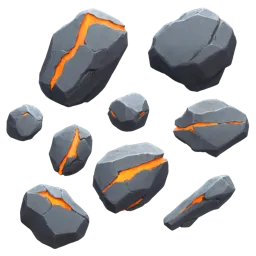
Mineral belt
The only ore there is
Debris field
Wall you can clear

Gravity well
Permanent wall

Nebula
Cover

Science anomaly
One to a system, at most
War
There is no paperwork between you and a neighbour's world — you send the fleet, and that IS the declaration. What follows is a ladder, and every rung is something somebody chose to do: strike, declare, rally. Each one is harder to climb back down than the last.
Strike
Nobody declares anything. You raid a world and you are at odds with its owner — the attack IS the declaration, recorded the moment the fleet launches rather than when it lands, so the victim watching it come already knows what it means. It is a state BETWEEN two players, never a right the aggressor earns: the raider is as exposed as the raided.
How it ends Lapses on its own, once neither of you has touched the other for a while. Every new blow pushes the clock back.
Declare
A war two players actually chose. Its point is the thing raiding cannot give you: opening a front without having to bomb a world first. Sides rather than a pair — which is what lets alliances arrive later without any of this being rewritten.
How it ends Not by silence. A declared war ends because somebody surrendered or somebody lost — and a surrender is refused until the war has lasted a minimum, so quitting is never instant.
Rally
A conflict an alliance has joined, and the moment it stops being a private quarrel. There are no invitations: a leader comes to the aid of a side where they already have an ally, which is why a warband is temporary — nothing outlives the war, there is no coalition to maintain.
How it ends The same two ways, decided on the SIDE's total rather than any one duel. Three against one cannot be settled by whichever pair crosses the line first.
Hostility falls away on its own. A declared war does not — that is the whole difference between a raid and a campaign.
How a war is foughtCommand
Fifty commanders, across five rarities. You put one at the head of a fleet and one in charge of a world, and what they are good at quietly becomes what you are good at. The legendaries do not only sharpen their own fleet — they carry the whole warband with them.
Rarity

Legendary
Assault · War Cry

Epic
Assault · Alpha Salvo

Rare
Scout · Phase Veil

Legendary
Bastion · Rampart

Epic
Assault · Barrage

Rare
Bastion · Rampart

Legendary
Hunter · Warband

Epic
Bastion · Rampart

Legendary
Industrial · Overproduction

Epic
Scout · Manoeuvre

Legendary
Scholar · Eureka

Legendary
Bastion · Rampart
Twelve of the fifty. The frame tells you how rare they are.
Worlds
Some worlds will feed a population for a century. Some pay in things that should not exist. Some are bare rock nobody will ever come for, which is its own kind of value. You do not know which is which until you have looked.
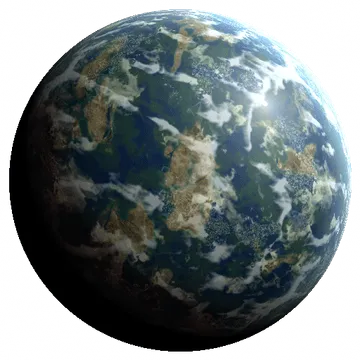
Lush
Water, weather, and room to grow into.

Ocean
Almost no land, and every metre of it argued over.
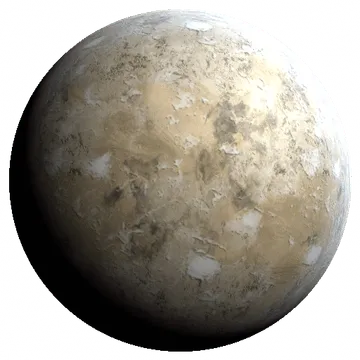
Arid
Dust and thin air. Shallow ground, easy digging.
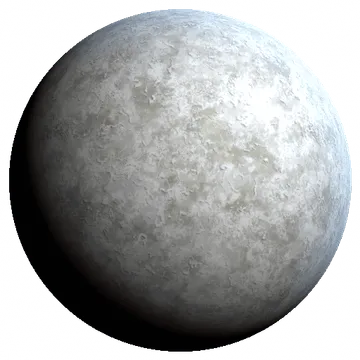
Frozen
Locked solid. Everything here is harder than it ought to be.

Magma
Still cooling, still moving. It pays in things you find nowhere else.
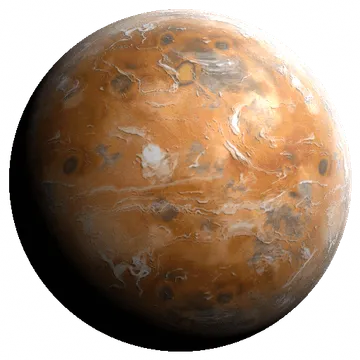
Barren
Bare rock. Cheap to hold, and no one is coming to take it from you.
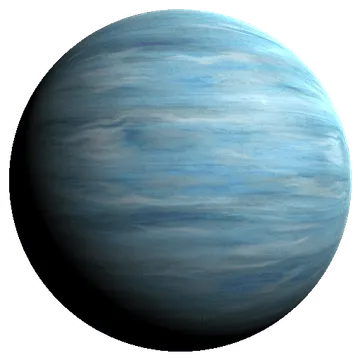
Blue giant
No surface to stand on. You take what you need from orbit.
Seven of the types you will survey.
Dispatches
Daily and weekly quests, on two bars in the HUD — and production boosts you can win from them, pull out of a pirate camp, or open in a free capsule.
Read the dispatch →Ships can be recycled back into resources, and the yard tells you what you will get before it touches anything.
Read the dispatch →Crossing the void costs energy, and you choose how fast to do it. Slowing down is cheaper — which makes distance a decision instead of a wait.
Read the dispatch →Deploy
Galactic Reigns is in closed beta: the door asks for a password, and the way in is an invite. If you have one, the galaxy is already running — pick a name, take a planet, and start deciding what it looks like.
Enter the betaFree to play, in the browser. No client to download — and if you want it on a home screen, it installs from the tab you are already in.